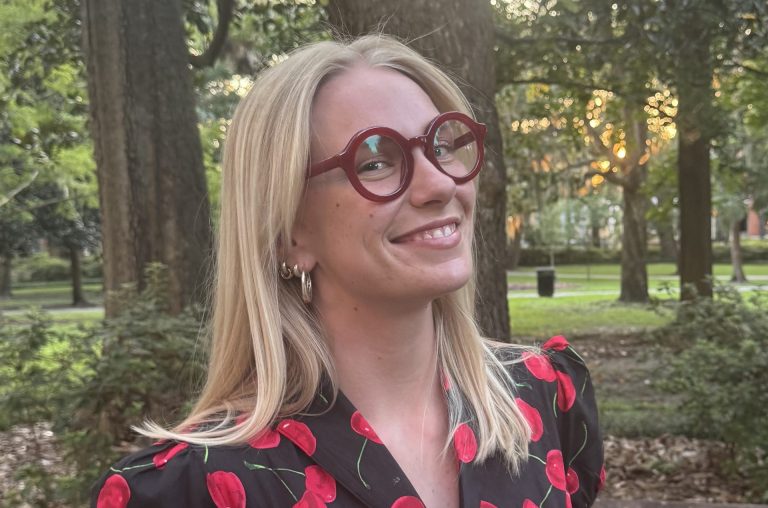
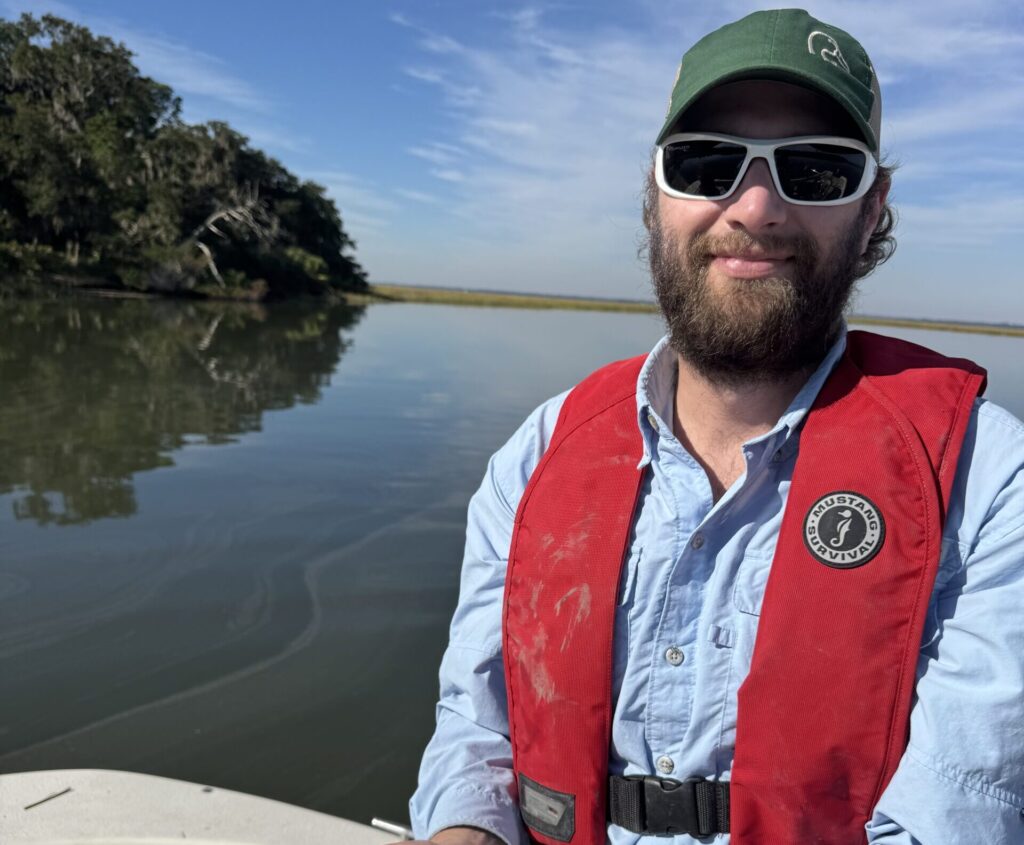
Ethan grew up in Pawtucket, Rhode Island, where an early introduction to hiking, camping, canoeing, and fishing fostered a lifelong connection to the outdoors. His interest in environmental systems continued to grow, eventually inspiring a career centered on estuarine science and coastal research. Ethan holds a Bachelor’s degree in Environmental Science and History from Roger Williams University and began his professional path working on an oyster farm in Winnapaug Pond in southern Rhode Island.
Ethan joined the Apalachicola National Estuarine Research Reserve (ANERR) in 2014 as the SWMP Water Quality Technician and advanced to the Nutrient and Meteorological Technician role in 2018. During his tenure in ANERR’s Research Department, he supported and maintained water quality stations, managed real-time telemetry networks, and contributed to prescribed fire operations. He also conducted Net Ecosystem Metabolism analyses using SWMP datasets, which helped launch a collaborative CO₂ flux project with the University of Notre Dame, Columbia University, and Penn State University.
As Research Coordinator for the Sapelo Island National Estuarine Research Reserve, Ethan is focused on advancing understanding of the seasonal and long-term trends shaping Sapelo Island’s estuary. His work will draw on SWMP long-term monitoring data; Net Ecosystem Metabolism estimates around the island; and assessments of estuarine acidification. He also plans to collaborate with partners to support research on the expanding range of mangroves; quantify lateral advection of estuary gases to improve metabolic rate estimates; and examine changes in nekton communities, nursery function, and coastal habitat dynamics. His interests also include integrating drone imagery to track shifts across marshes, mangroves, oyster reefs, and shoreline environments.
We are excited to welcome Ethan to the team and look forward to his leadership in strengthening Sapelo Island’s research capacity and advancing estuarine science and conservation.